
Looking for a nourishing and moisturizing lotion that can also provide the benefits of CBD? Look no further! Our Cucumber Melon CBD Lotion…
$19.99each
Quantity
1
25% OFF WITH CODE
Limited-Time Sale | Ends November 15 at 7 PM PSTOne-time purchases only.Shop Now
Gels, lotions, balms, and bath bombs all carry a CBD number, but that number means something different on a topical. Here is how to compare formats and read the label honestly.
By the BuyLegalMeds team12 min read
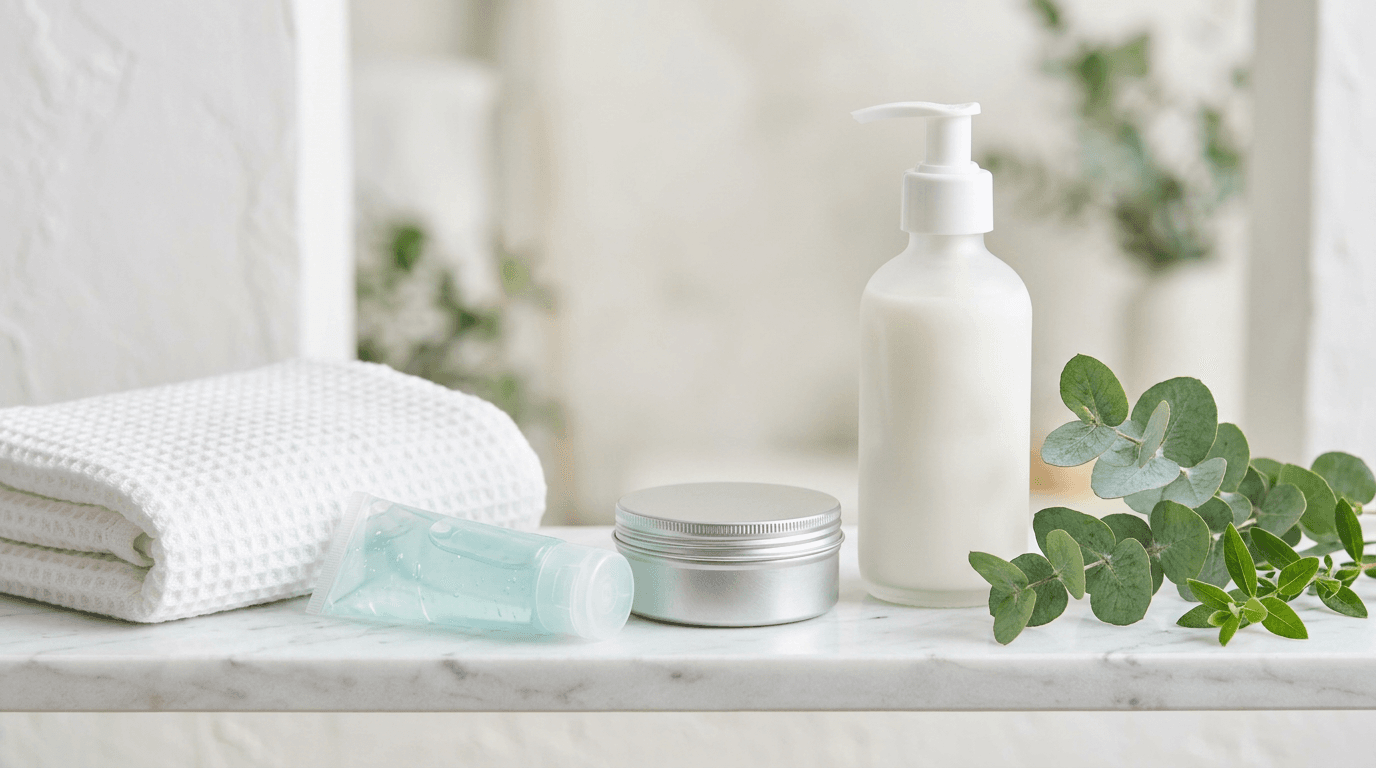
Topical CBD products are among the easiest to try, because nothing is swallowed. They are also among the easiest to misunderstand. A bottle of lotion labeled 250mg CBD and a gummy pack labeled 250mg CBD do not mean the same thing, and the way a gel feels on the skin tells you very little about what, if anything, the CBD in it does.
This guide explains what topicals are, how gels, lotions, balms, and bath products differ, what cooling and non-cooling formulas usually mean, how to read the labeled CBD amount, what a label can and cannot tell you, and how to protect yourself from ingredient sensitivities. It also explains how to separate general cosmetic features, such as scent and texture, from medically substantiated effects, which topical CBD products have not been shown to have under FDA review. We do not make treatment claims here, and you should be skeptical of any seller that does.
A topical is any product meant to be applied to the skin rather than swallowed. In the CBD market that includes lotions, gels, creams, balms, salves, lip balms, roll-ons, and bath items. In each, a CBD-containing hemp extract is mixed with the usual ingredients of a skin care product: water or oil, emollients, thickeners, preservatives, and fragrance.
The category sits in a different regulatory space than products you eat. Under U.S. law, a product that is applied to the body for cleansing, beautifying, or altering appearance is generally a cosmetic, and cosmetics are not required to be approved by the FDA before sale. A product that is intended to treat or prevent disease is a drug, and drugs require approval. This is why responsible sellers describe topicals in terms of how they feel and what they are made of, and why claims about treating pain or other conditions are a red flag. The FDA has stated that it has not approved CBD-containing cosmetics for any medical purpose.
The format changes the texture, the way the product spreads, how long it stays on the surface, and the way it is best used. The differences are more about feel and practicality than about anything the CBD does.
Gels are water-based and usually lightweight. They spread quickly, absorb into the surface of the skin with little residue, and often feel cool as they evaporate. People who dislike a greasy feel often prefer gels. Because they are lighter, they may need to be reapplied more often to maintain the sensation of a coating.
Lotions are an emulsion of water and oil, which gives them a smooth, spreadable texture that sits between a gel and a cream. They are designed for broad coverage and everyday use, similar to a moisturizer. Lotions in our catalog come in several scents. Fragrance is a common cause of skin sensitivity, so it is worth reading the ingredient list rather than choosing by scent alone.
Balms are thicker, often wax and oil based, with little or no water. They stay where you put them, which makes them useful for small areas and for lips. A balm tends to feel heavier and more occlusive, meaning it forms a layer on the surface. Our CBD lip balm falls into this category.
Bath bombs and soaks dissolve in water. They are used for the experience of the bath, with scent and color. The CBD in a bath product is diluted in a large volume of water, so the labeled amount should not be read as an amount applied to your skin. Treat these as spa-style products rather than anything with a measurable delivery.
Shop this topic
Looking for a nourishing and moisturizing lotion that can also provide the benefits of CBD? Look no further! Our Cucumber Melon CBD Lotion…
$19.99each
Looking for relief to start adding to your daily routine? It's time to look no further! Not only is our ACTIV8 CBD Freeze fast-acting, but…
$29.99each
Keep your lips moisturized and healthy with ACTIV8 CBD Lip Balm! Our lip balm is made with all-natural, organic ingredients and is free fro…
$7.99each
You will see some gels and rubs marketed as cooling. A cooling sensation is a skin feel, produced by ingredients that interact with temperature-sensing nerves or by simple evaporation of water or alcohol. Menthol is a common example in many over-the-counter topical products, though we do not assume any particular ingredient is in a given product. Always confirm the ingredient list on the product page.
The key point is that a cool or tingling feeling is a sensory effect of the formula, not evidence that CBD is doing anything. A gel can feel cooling because of other ingredients, and a gel can feel neutral and still be a perfectly good product. If a cooling sensation matters to you, look for it in the ingredient list and the product description. If it does not, a non-cooling lotion or balm may be gentler, especially on sensitive skin or around the eyes, which cooling ingredients can irritate.
Our catalog includes a gel listed as ACTIV8 CBD Freeze Pain Relieving Gel, in 250mg and 650mg versions. We show the listing name as it appears, and we encourage you to read the full ingredient list and warnings on that product page rather than relying on the name. Statements about relieving pain describe how a product is positioned in the market, and they are not claims that CBD has been proven to treat pain. The FDA has not evaluated CBD topicals for that purpose.
Beyond the hemp extract, a topical is built from ingredients you can find in any skin care aisle. The categories below describe typical roles. They are not a list of what is in a particular product, so confirm on the ingredient panel.
The label should list ingredients in descending order by amount, with the highest concentration first. Cosmetic labels in the United States are required to list ingredients, which makes it possible to check for something you already know bothers your skin.
This is the part of a topical label that confuses the most people, so we will state it as clearly as we can.
The milligram figure on a topical is the total amount of CBD in the entire container. A lotion labeled 250mg CBD contains 250 milligrams spread throughout the whole bottle. It is not the amount you absorb, and it is not the amount per application. It describes the formula, not a delivered dose.
Several consequences follow.
Our ACTIV8 lotions are listed at 250mg CBD per container in several scents. The ACTIV8 gel is listed in two strengths, 250mg and 650mg. The lip balm is listed at 50mg, and the bath bombs at 100mg each. Because the containers differ in size, the best comparison is milligrams per ounce or milliliter, which you can calculate from the net contents shown on the label. If you cannot find the net contents, ask customer support.
A topical label is useful, but it has limits. Here is what you can reasonably learn and what you cannot.
For these reasons, the label is the beginning of your evaluation and not the end. Look for a lab report that confirms cannabinoid content for the batch you are buying, and confirm that the batch number on the package matches the report.
Shop this topic
Are you looking to elevate your bath time routine to a new level of relaxation and rejuvenation? Look no further! Our CBD Bath Bombs are th…
$19.99each
Looking for a nourishing and moisturizing lotion that can also provide the benefits of CBD? Look no further! Our Juniper Breeze CBD Lotion…
$19.99each
Looking for a nourishing and moisturizing lotion that can also provide the benefits of CBD? Look no further! Our Brown Sugar and Fig CBD Lo…
$19.99each
It helps to sort every statement on a topical into one of three groups.
When a product page leans heavily on the third group, take a step back. It does not mean the product is bad, but it means the seller is making promises the evidence does not currently support. Choose based on groups one and two, and talk with a clinician if you are dealing with pain or another health concern.
Skin reactions to topicals are usually caused by something other than the CBD. Fragrance, essential oils, preservatives, and cooling agents are common triggers. People with eczema, dermatitis, allergies, or very reactive skin should be especially careful.
A widely used precaution for any new skin care product is a patch test. Try it on a small area first, such as the inside of the forearm, and wait to see whether redness, itching, or swelling develops. If it does, wash it off and stop using it.
Some other practical rules follow.
The table below summarizes how the formats generally compare. These are general characteristics, and an individual product can differ.
| Format | Typical feel | Best suited to | Things to check |
|---|---|---|---|
| Gel | Light, water-based, may feel cool | Quick absorption, people who dislike residue | Cooling agents, alcohol content, fragrance |
| Lotion | Smooth, moisturizing | Larger areas, daily routines | Scent, preservatives, net contents |
| Balm | Thick, protective | Small areas and lips | Wax and oil ingredients, flavor |
| Bath product | Dissolves in water | A bath routine | Fragrance, dyes, skin sensitivity |
Start with how you want to use it, not with the biggest milligram number. If you want an everyday moisturizer feel, a lotion makes sense. If you prefer a light, fast-drying texture, try a gel. If you want something for lips or a small area, a balm is practical. If you want a ritual, a bath product fits.
Then compare within that format. Check the ingredient list for anything that has bothered you before. Compare strength per ounce rather than per container. Look for a batch number and lab report. Read the warnings.
You can find our scented ACTIV8 lotions, the gel, the lip balm, and the bath bombs together under the full catalog. If you are buying for the first time, a single small item is a good way to learn how a formula feels on your skin before you commit to more.
Topicals are less fragile than edibles, but they still have a shelf life. Water-based gels and lotions depend on preservatives to stay safe, and heat, sunlight, and repeated exposure to air can break down a formula over time. Store them in a cool place away from direct sun, keep the cap tight, and avoid dipping fingers into a jar if a pump or tube is available, since that introduces bacteria.
Look for a best-by date or a period-after-opening symbol, which looks like an open jar with a number of months. If a product changes smell, color, or texture, separates in an unusual way, or develops spots, stop using it. Do not store topicals in a hot car or a steamy bathroom for long stretches.
Also remember that a product made for skin is not for swallowing. Keep lotions, gels, and bath products away from children and pets, who may be attracted by scent or color, and wash your hands after applying a product, especially before touching your eyes or eating. If you are applying a topical to a child or to someone else, ask a pediatrician or other professional first, because the guidance for adults does not automatically apply.
Finally, keep the original packaging, or at least a photo of the label and batch number. If you ever want to ask a question about a product, having that information in hand makes it easy for a support team to help you.
Topical CBD can be a pleasant addition to a skin care routine. It is easiest to enjoy when you evaluate it as skin care: the feel, the scent, the ingredients, and the honesty of the seller. The CBD number on the label describes the formula, not a delivered amount, and no label can tell you what a product will do for you. Be wary of treatment claims, patch test when you can, and keep your healthcare professional in the loop for anything involving pain or a health condition.
It is the total amount of CBD in the whole container, not the amount per application and not the amount absorbed. Compare products by milligrams per ounce or milliliter if you want to compare concentration.
No. A cooling feel usually comes from other ingredients or from evaporation. It is a sensory effect of the formula, not evidence of what CBD does.
No. The FDA has not approved CBD-containing topical products to treat pain or any other condition. Be cautious of sellers that make treatment claims.
Read the ingredient list for fragrance or other known triggers and test a small area first. Stop using the product and seek advice if you develop redness, itching, swelling, or a rash.
Bath products dilute their ingredients in a large amount of water, so the labeled figure is not an amount applied to your skin. Treat them as a bath experience product.
These statements have not been evaluated by the Food and Drug Administration. These products are not intended to diagnose, treat, cure, or prevent any disease. This article is for general education only and is not medical advice. Talk with a qualified healthcare professional before using any new product, especially if you are pregnant, nursing, or take medication.
Looking for a nourishing and moisturizing lotion that can also provide the benefits of CBD? Look no further! Our Cucumber Melon CBD Lotion…
$19.99each
Looking for relief to start adding to your daily routine? It's time to look no further! Not only is our ACTIV8 CBD Freeze fast-acting, but…
$29.99each
Keep your lips moisturized and healthy with ACTIV8 CBD Lip Balm! Our lip balm is made with all-natural, organic ingredients and is free fro…
$7.99each
Are you looking to elevate your bath time routine to a new level of relaxation and rejuvenation? Look no further! Our CBD Bath Bombs are th…
$19.99each
CBD Basics12 min read
New to CBD? This guide explains what the word means, how products differ, how to read a label without getting tripped up by milligrams, and what to check before you buy.

Quality & Testing11 min read
A lab report is only useful if you know what to look for. This guide walks through a certificate of analysis section by section and flags the warning signs.
Buying Guide11 min read
With no FDA pre-approval, quality is up to you and the seller. This checklist covers labels, lab reports, claims, reviews, shipping, and subscriptions.

You must be 21 or older to enter.
By entering you agree to our Terms of Service and Privacy Policy.


