
Have you been looking for a high-concentration CBD product that you can easily mix into your favorite foods and beverages, but are unable t…
$24.99each
Quantity
1
25% OFF WITH CODE
Limited-Time Sale | Ends November 15 at 7 PM PSTOne-time purchases only.Shop Now
Isolate, broad spectrum, and full spectrum are not quality grades. They describe what is in an extract. Here is what each term means and how to check a claim.
By the BuyLegalMeds team11 min read
Few CBD terms generate as much confusion, and as much marketing, as isolate, broad spectrum, and full spectrum. Sellers use them to signal quality, shoppers use them to avoid THC, and in the process the words often take on meanings they do not have. A full-spectrum product is not automatically better. An isolate is not automatically weaker or purer in the way people assume. And none of these labels is worth anything without a lab report to back it up.
This guide explains what each term describes, what is and is not in each type of extract, why the THC question matters, how the so-called entourage effect fits in and why it deserves caution, how drug testing works in this context, and how to verify a spectrum claim yourself. It is educational, and it does not tell you which type to use.
When a producer extracts compounds from the hemp plant, the raw extract contains many substances. The most prominent is CBD, but there are also other cannabinoids, aromatic compounds called terpenes, flavonoids, plant waxes, and fats. Producers can then process the extract to different degrees, removing some or most of these other compounds. The spectrum terms describe how much of the original mix remains.
It helps to picture a spectrum running from the most complete mix to the most refined.
These are categories describing contents. They are not grades of quality, and none is regulated by a standard definition that every company must follow. That is why verification matters.
A full-spectrum extract contains a wide range of the cannabinoids and other compounds found in the hemp plant. Besides CBD, it can include small amounts of cannabinoids such as CBG, CBC, and CBN, plus terpenes and flavonoids. Importantly, it also contains THC.
For hemp-derived products, the THC in a full-spectrum extract is limited by law at the plant and extract stage. The 2018 Farm Bill defines hemp as cannabis and its derivatives with no more than 0.3 percent delta-9 THC on a dry weight basis. In a finished product, that can translate into a small, measurable amount of THC per serving. A full-spectrum product is therefore not THC free, even though it is not designed to cause intoxication.
Common reasons shoppers choose full spectrum include a preference for a less processed extract, an interest in the whole-plant concept, and the characteristic earthy taste and aroma. Common reasons shoppers avoid it include drug testing concerns, a wish for zero THC, and sensitivity to even small amounts.
Shop this topic
Have you been looking for a high-concentration CBD product that you can easily mix into your favorite foods and beverages, but are unable t…
$24.99each
Our ACTIV8 CBD Tinctures are a powerful and an effective way to support your overall well-being. Simply just add a few drops of CBD to your…
$24.99each
Looking for a powerful and effective way to support your overall well-being while also giving back to our troops? Our American CBD Tincture…
$29.99each
A broad-spectrum extract starts with the same raw material and goes through additional processing to remove THC, while keeping other cannabinoids and plant compounds. The goal is a middle option: more than CBD alone, without THC.
The caveat is that THC removal varies. Some broad-spectrum products have no detectable THC. Others may have trace amounts that fall below a reporting threshold or that are still measurable. Broad spectrum is not a guarantee of THC free unless the lab report shows THC as not detected for that batch. Even then, not detected means below what the lab method can measure, not necessarily zero.
People choose broad spectrum when they want more than isolate but want to avoid THC. People avoid it for the same reason as any other processed extract: they prefer isolate for simplicity, or full spectrum for a less processed profile.
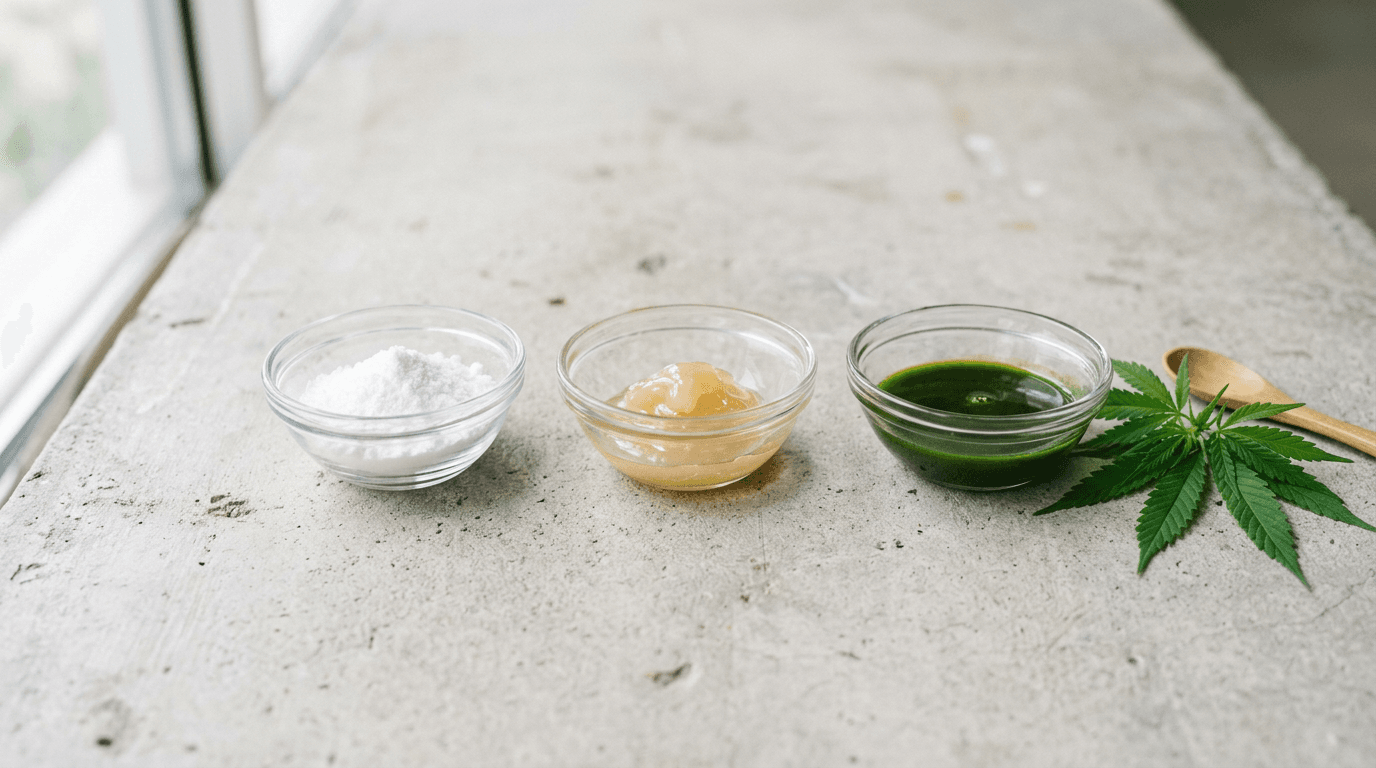
Isolate is the most refined form. The extract is processed until what remains is CBD, typically as a white crystalline powder that is described as 99 percent pure or higher. Because the other compounds are removed, an isolate product should contain no THC and should have little taste or smell of its own.
Isolate can be sold as a powder, such as the ACTIV8 CBD Pure Isolate Powder in our catalog, or mixed into finished products like tinctures, gummies, and topicals. Using an isolate gives manufacturers a predictable cannabinoid profile and lets them dose precisely.
People choose isolate to avoid THC, for a neutral taste, and for simplicity. People avoid it if they prefer a broader mix of plant compounds.
A caution on powders. Isolate powder is a very concentrated ingredient, and measuring it accurately at home needs a precise scale. Mixing it into a carrier unevenly can cause some servings to contain much more than others. Unless you have experience, a finished and tested product is usually the safer way to use isolate.
| Isolate | Broad spectrum | Full spectrum | |
|---|---|---|---|
| CBD | Yes | Yes | Yes |
| Other cannabinoids | Removed | Retained in part | Retained |
| Terpenes and plant compounds | Removed | Retained in part | Retained |
| THC | None by design | Removed or reduced | Present in small amounts |
| Taste and aroma | Neutral | Mild to moderate | Earthier |
| Main verification point | Only CBD detected | THC not detected | THC within legal limits |
The entourage effect is the idea that cannabinoids, terpenes, and other plant compounds work together to produce effects different from, or greater than, any of them alone. It is frequently cited to explain why full-spectrum products are said to be preferable.
The idea is interesting and is a subject of ongoing research, but it should be described accurately. The evidence in humans is limited and mixed, and it is not established that a full-spectrum or broad-spectrum CBD product performs better than isolate for any particular purpose. The FDA has not evaluated these products for such claims. If a seller presents the entourage effect as settled science or as a reason to buy, treat it as a marketing argument, not a fact.
There is a fair, modest way to say it: some researchers hypothesize that compounds may interact, and some people prefer whole-plant extracts for that reason or for their own experience. That is a preference, not proof.
THC content is the practical reason most people care about spectrum.
THC can cause impairment at sufficient amounts, and it is the compound that standard workplace drug tests look for. Full-spectrum products contain it. Broad-spectrum and isolate products are designed to avoid it. If you are subject to testing, or if you want to avoid THC for any other reason, spectrum type matters.
Most workplace drug screens look for THC metabolites, not CBD. The metabolites can show up in a test if you have taken enough THC, including the small amounts in some full-spectrum products, particularly with frequent use. Testing thresholds vary. There are documented cases where people using products with trace THC tested positive, and mislabeled products can contain more THC than expected.
We cannot predict whether any product will or will not cause a positive test for you, and no seller can honestly guarantee it. If a test could affect your job, your license, your housing, or your legal status, the most conservative choice is to avoid cannabinoid products altogether, or at least to confirm with a lab report that THC was not detected and to speak with whoever administers the test.
Shop this topic
Taste the natural power of CBD with UrbanLeaf Naturals CBD Tinctures! Our tinctures are made with pure, unflavored CBD, carefully extracted…
$29.99each
Looking for relief to start adding to your daily routine? It's time to look no further! Not only is our ACTIV8 CBD Freeze fast-acting, but…
$29.99each
The most important step is to move from the front of the package to the lab report.
Spectrum interacts with the rest of the label in ways that are easy to overlook.
The same CBD safety considerations apply to every type. The FDA has identified concerns about liver injury, interactions with other medicines, drowsiness, and gastrointestinal side effects, and advises against CBD use during pregnancy and nursing. Full-spectrum products add the considerations that come with any THC content, including potential impairment at higher amounts, drug test results, and legal differences from state to state. People who are sensitive to THC, who are driving, or who are around children should be especially careful about THC-containing products.
There is no universally right answer, but a simple decision path can help.
You can browse our tinctures and the isolate powder in the shop, then use the verification steps above on whatever you choose.
Yes. A manufacturer can blend extracts, or add isolate to a broad-spectrum base to reach a target strength. That is why the ingredient list matters. A label that reads broad-spectrum hemp extract plus CBD isolate is describing a blend, and its cannabinoid profile will reflect both. If the label only says hemp extract, ask the seller which kind it is.
Not necessarily. Processing removes compounds, and what remains depends on the starting plant and the methods used. A highly processed extract made from a poorly grown plant with weak testing is not better than a lightly processed one that has been tested thoroughly. Judge the product by its documentation, not by how many steps it went through.
Extract type, sourcing, testing, packaging, and brand all affect price. Comparing price per milligram of CBD is a reasonable start, but a lower figure can reflect a cheaper extract or less testing as much as efficiency. Use price as one input, and let the lab report and label decide.
No. Full-spectrum hemp extract comes from hemp that meets the federal limit of 0.3 percent delta-9 THC by dry weight. Marijuana is cannabis above that limit and is regulated differently. A full-spectrum hemp product still contains some THC, which is why the drug testing point above matters.
Terpenes are aromatic compounds that give plants their scent. Some products list them, either because they came from the extract or because they were added back for flavor. The presence of terpenes on a label does not tell you the extract type. Check the cannabinoid profile and the ingredient statement.
If you try a product, write down the product name, lot number, the amount you took, the time, and anything you noticed. If you later switch spectrum type, you will have a clear record of what changed. Share it with a healthcare professional if you are discussing the product with one.
Isolate, broad spectrum, and full spectrum describe the contents of an extract, not its worth. The terms are useful when they are confirmed by a lab report and unhelpful when they are used as a substitute for one. Decide what you need, whether that is avoiding THC, a neutral taste, or a less processed extract, and then verify that the product in your hand matches the claim. When it does not, or when the seller cannot show you, choose a different product.
None is universally better. They describe what an extract contains, not its quality. The right choice depends on whether you want to avoid THC, how much you value taste and processing, and what a lab report shows for the product.
It is designed to have THC removed or reduced, but this varies. Only a lab report for your batch can show whether THC was not detected.
It can. Full-spectrum products contain small amounts of THC, and standard drug tests look for THC metabolites. No seller can honestly guarantee a negative result.
No. It is a hypothesis that plant compounds may work together, and human evidence is limited and mixed. Treat it as an open research question, not a reason to buy.
Check the ingredient list, then compare it with the cannabinoid profile on a lab report for your lot number. Isolate shows CBD alone, broad spectrum shows multiple cannabinoids with THC not detected, and full spectrum shows multiple cannabinoids including a small amount of THC.
These statements have not been evaluated by the Food and Drug Administration. These products are not intended to diagnose, treat, cure, or prevent any disease. This article is for general education only and is not medical advice. Talk with a qualified healthcare professional before using any new product, especially if you are pregnant, nursing, or take medication.
Have you been looking for a high-concentration CBD product that you can easily mix into your favorite foods and beverages, but are unable t…
$24.99each
Our ACTIV8 CBD Tinctures are a powerful and an effective way to support your overall well-being. Simply just add a few drops of CBD to your…
$24.99each
Looking for a powerful and effective way to support your overall well-being while also giving back to our troops? Our American CBD Tincture…
$29.99each
Taste the natural power of CBD with UrbanLeaf Naturals CBD Tinctures! Our tinctures are made with pure, unflavored CBD, carefully extracted…
$29.99each

Quality & Testing11 min read
A lab report is only useful if you know what to look for. This guide walks through a certificate of analysis section by section and flags the warning signs.
CBD Tinctures11 min read
A tincture label shows one big number, and that number is easy to misread. This guide explains concentration, carriers, flavors, storage, and how to compare brands fairly.
Hemp-Derived THC11 min read
Hemp-derived THC is a different category from CBD, with different effects, rules, and risks. This guide explains the basics and what to verify before you buy.

You must be 21 or older to enter.
By entering you agree to our Terms of Service and Privacy Policy.


