
Our ACTIV8 CBD Tinctures are a powerful and an effective way to support your overall well-being. Simply just add a few drops of CBD to your…
$24.99each
Quantity
1
25% OFF WITH CODE
Limited-Time Sale | Ends November 15 at 7 PM PSTOne-time purchases only.Shop Now

A tincture label shows one big number, and that number is easy to misread. This guide explains concentration, carriers, flavors, storage, and how to compare brands fairly.
By the BuyLegalMeds team11 min read
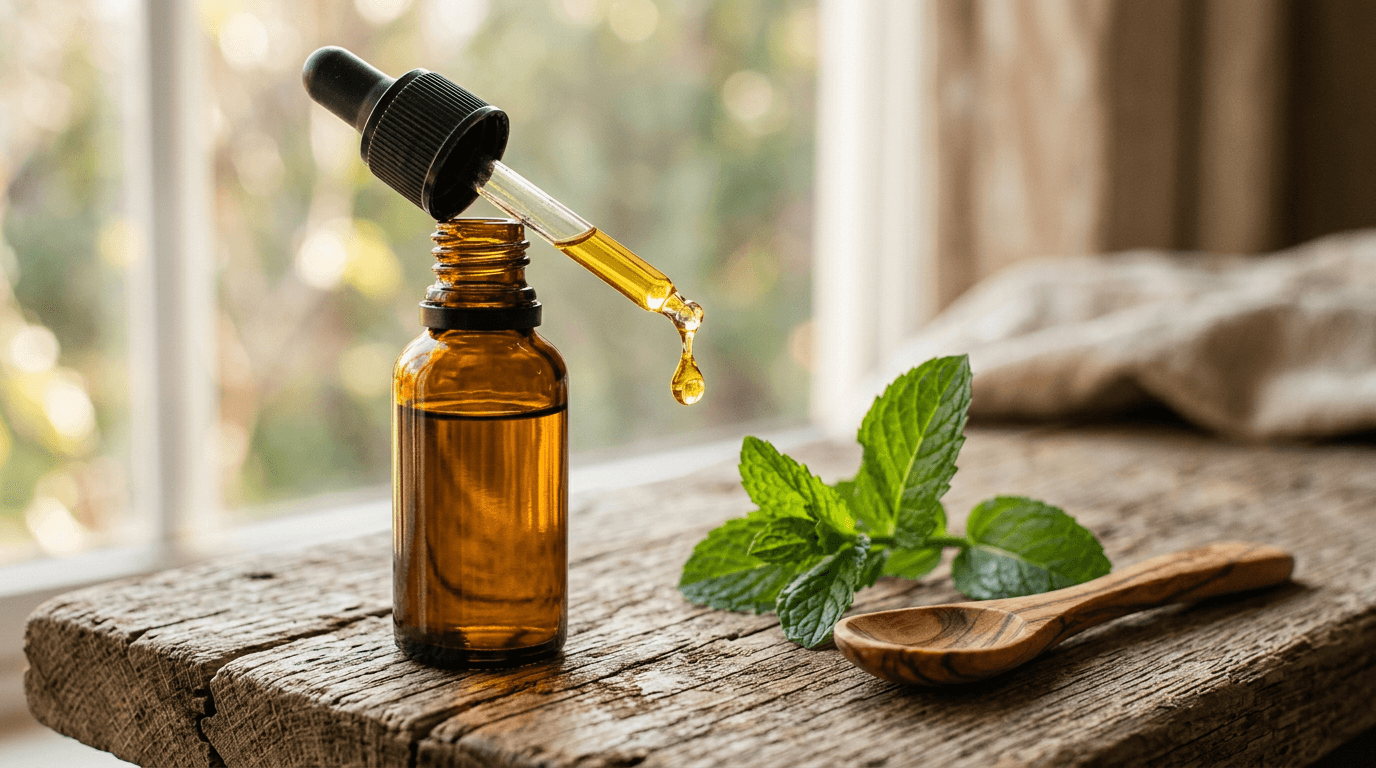
The tincture is the classic CBD format. A small bottle, a dropper, and a liquid that comes in a range of strengths from modest to enormous. It is also the format with the most room for misunderstanding, because one product might be sold in five different strengths under a single listing, and the numbers on the label describe the bottle rather than the serving.
This guide explains what a tincture is, how it differs from other CBD formats, how carriers and flavors shape the product, how to read a strength and calculate concentration, how to compare brands honestly, and how to store a tincture. It is educational and does not recommend any amount to take. Over-the-counter CBD is not approved by the FDA to diagnose, treat, cure, or prevent any disease, and individual responses vary.
In traditional herbal practice, a tincture is a liquid extract made by steeping plant material in a solvent such as alcohol. In the CBD market, the word has loosened. A CBD tincture is usually a hemp-derived cannabinoid extract dissolved or suspended in a liquid carrier, packaged in a bottle with a built-in dropper. Many products called oils and many called tinctures are essentially the same thing. Some sellers reserve tincture for alcohol-based liquids and oil for oil-based ones, but you should read the ingredient list rather than rely on the word.
The usual way to use a tincture is to measure a dropper amount and place it under the tongue, which is called sublingual use, or mix it into food or a drink. The label should describe the intended method and the serving. The dropper is typically marked with a fill line, and the dropper size on a given bottle determines how much liquid, and therefore how much cannabinoid, is in a full dropper.
The reasons are practical.
There are also reasons some people prefer other formats. Tinctures require measuring, the taste of unflavored products can be earthy, and a dropper bottle is less portable and less discreet than a gummy.
Shop this topic
Our ACTIV8 CBD Tinctures are a powerful and an effective way to support your overall well-being. Simply just add a few drops of CBD to your…
$24.99each
Taste the natural power of CBD with UrbanLeaf Naturals CBD Tinctures! Our tinctures are made with pure, unflavored CBD, carefully extracted…
$29.99each
Looking for a powerful and effective way to support your overall well-being while also giving back to our troops? Our American CBD Tincture…
$29.99each
A comparison with other formats shows why a tincture label is read differently.
A gummy is a fixed serving, so the label shows the count and total, and the amount per piece is easy to calculate. A topical is applied to skin, and its label describes the formula. A syrup is a larger volume of liquid with a lower concentration, which is closer to a tincture in labeling style but typically sold in much larger bottles. A tincture delivers a concentrated amount of cannabinoid in a small liquid volume, which is why the strength matters so much and why the dropper is the unit that counts.
The most important rule is that the large number on the front of a tincture is the total amount of CBD in the whole bottle.
A bottle labeled 1,000mg CBD contains 1,000 milligrams across the entire contents. A single dropper delivers only a fraction of that. To find out how much, you need two more numbers: the bottle volume and the dropper volume, or the serving size listed on the label.
Concentration tells you how much CBD is in each milliliter. The formula is simple.
Concentration in mg per mL equals total milligrams divided by bottle volume in milliliters.
For example, a 30 milliliter bottle labeled 1,500mg contains 50 milligrams per milliliter. A 15 milliliter bottle labeled 1,500mg contains 100 milligrams per milliliter. The totals are identical, but the second bottle is twice as concentrated, which means each drop carries twice as much.
If a full dropper holds about one milliliter, a 50 mg per milliliter product delivers about 50 milligrams in a full dropper, and a 100 mg per milliliter product delivers about 100. Droppers vary, so check the label and the markings on your dropper rather than assuming.
Because strength is expressed as a total, bigger bottles can look stronger even when they are not. A 60 milliliter bottle labeled 1,000mg is more dilute than a 30 milliliter bottle with the same label. Always compare concentration, not just the headline total.
Once you know the total, you can calculate price per milligram by dividing the price by the total milligrams. Higher-strength bottles often cost less per milligram. That can be a good deal if you already know that you want a higher amount. It is not a bargain if you buy a stronger bottle than you will use and the product sits unused past its best-by date.
Several of our tincture products are listed as one product with several strengths. The ACTIV8 CBD Tincture is listed at 325mg, 1,000mg, 2,500mg, 5,000mg, and 10,000mg. UrbanLeaf Naturals CBD Tincture is listed at 500mg, 1,500mg, and 3,500mg. American CBD Tincture is listed at 500mg, 2,500mg, 5,000mg, and 8,000mg.
When you choose a variant on the product page, check what changes. Often the bottle volume, the concentration, or both change from one variant to the next. Confirm the volume and the milligrams per milliliter for the specific variant you select, and compare variants on concentration and price per milligram, not on the headline alone.
The cannabinoid extract is only part of a tincture. The rest is the carrier and any flavoring.
A carrier is the liquid that holds the extract. Common carriers across the industry include MCT oil, which is derived from coconut or palm kernel oil, hemp seed oil, olive oil, and other food-grade oils. Some tinctures use alcohol or glycerin instead.
Why does the carrier matter? It affects taste, texture, shelf life, and who can use the product. Someone with a tree nut or coconut allergy needs to read the label. Someone who dislikes the feel of oil might prefer a different carrier. Some carriers solidify in cold temperatures and may look cloudy in a cool room, which is generally harmless.
We cannot tell you which carrier any product uses from this guide, because formulas change. Read the ingredient list on the product page and package.
Tinctures may be unflavored or flavored with natural or artificial flavoring. Unflavored products tend to taste like the carrier and the hemp. Flavored products are easier to take, and may also include sweeteners. Check for added sugar or sugar alcohols if that matters to you, and for allergens.
Some tinctures contain terpenes, which are aromatic plant compounds. Terpenes affect smell and taste. Whether they affect anything else is not established, and you should not assume a terpene-containing product behaves differently in the body.
A tincture can be made with isolate, broad-spectrum, or full-spectrum extract. These terms describe what the extract contains, and they matter for THC content, for drug testing, and for how you read a lab report. Our dedicated guide on those three terms goes deeper. For the purposes of this guide, remember two points.
Our catalog also includes an ACTIV8 CBD Pure Isolate Powder, listed at 500mg and 1,000mg, which can be mixed into a carrier at home. That route puts the responsibility for accurate mixing on you and is not recommended unless you are comfortable with measuring and with the risk of uneven distribution.
Shop this topic
Have you been looking for a high-concentration CBD product that you can easily mix into your favorite foods and beverages, but are unable t…
$24.99each
Our CBD Pet Drops are a natural, safe, and effective way to support your furry friend's overall well-being. Made with high-quality CBD oil…
$24.99each
If you're looking for a quick and easy way to get your daily dose of CBD, look no further than our ACTIV8 CBD Syringe! This innovative prod…
$34.99each
Use a consistent process, and the differences become visible.
Applied to three real products, you will probably find that concentration varies widely between lines, that variants within a line can differ in more than total strength, and that the cheapest per-milligram option is not automatically the right choice.
We do not recommend amounts, but a good label gives you what you need to decide responsibly. Look for these items.
Many people who use tinctures start with a small amount and watch how they feel before changing it. That is a common sense approach rather than a medical recommendation. Talk with a healthcare professional about what is appropriate for you, especially if you take medication.
The general CBD safety points apply here. The FDA has identified concerns about liver injury, drug interactions, drowsiness, and gastrointestinal effects, and has advised against use during pregnancy and breastfeeding. Because tinctures can deliver large amounts of cannabinoid in a small volume, measuring carefully is especially important. A full dropper of a high-concentration product can contain far more than a full dropper of a low-concentration one.
Additional practical points follow.
Tinctures are more stable than many edibles but not permanent. Light, heat, and air can degrade cannabinoids and oils over time.
In everyday shopping the words are used loosely. Traditionally, a tincture is an extract made with alcohol, and an oil is an extract suspended in a carrier oil such as MCT oil or hemp seed oil. Many products sold as CBD tinctures are actually oil-based. The ingredient list tells you which you have, and it matters if you are avoiding alcohol or a particular oil.
Droppers are not standardized. Some are marked with measurement lines, and some are not. A full dropper from one brand may hold a different volume than another. Read the label to see how much liquid the brand considers a serving, and measure with the markings, not by eye. If the dropper has no markings, ask the seller what volume it holds.
Flavoring is added for taste, and it can include sweeteners, essential oils, or natural flavors. If you have allergies or sensitivities, read the ingredient list. Unflavored products often taste earthy, which some people dislike and others prefer.
Some natural separation or clouding can occur, particularly in the cold. A product that smells rancid, tastes sharply off, or shows mold or unusual particles should not be used. Shake products as the label directs, and contact the seller if something looks wrong.
Only if you will use it before it expires. A large bottle costs less per milligram, but oils can degrade with time, heat, and light. If you are new to a product, a smaller bottle lets you learn how you like it before committing.
Many labels allow it, and some brands say to take it directly. Mixing can change how much you actually consume if some stays on the cup or spoon. Follow the label, and keep notes on how you take it so you can describe your routine accurately to a professional if you discuss it.
Yes. Include the product name, the strength, the amount you take, and how often. This helps them check for interactions with your medications, and it gives them accurate information if you are scheduled for blood work, since liver values can be affected.
A tincture rewards the shopper who does a little arithmetic. Divide the total by the volume, find the amount in a dropper, compare variants honestly, read the carrier and ingredient list, and look for a lab report that matches the batch. If the label cannot give you those answers, that is useful information in itself. Start with a modest bottle in a format you understand, and let the label and documentation, not the biggest number on the front, guide the decision.
It is typically the total amount of CBD in the whole bottle. To find the amount per serving, check the serving size and calculate concentration by dividing total milligrams by the bottle volume in milliliters.
Divide the total milligrams by the bottle volume. For example, 1,500mg in a 30 mL bottle is 50 mg per mL.
The terms are often used interchangeably. Some sellers use tincture for alcohol-based liquids and oil for oil-based ones, so read the ingredient list to see what carrier is used.
Not necessarily. A larger bottle with the same total milligrams is more dilute. Compare concentration rather than the headline total.
Keep it in a cool, dark place with the cap tightly closed, away from heat and sunlight, and check the best-by date. Discard it if it smells rancid or changes noticeably.
These statements have not been evaluated by the Food and Drug Administration. These products are not intended to diagnose, treat, cure, or prevent any disease. This article is for general education only and is not medical advice. Talk with a qualified healthcare professional before using any new product, especially if you are pregnant, nursing, or take medication.
Our ACTIV8 CBD Tinctures are a powerful and an effective way to support your overall well-being. Simply just add a few drops of CBD to your…
$24.99each
Taste the natural power of CBD with UrbanLeaf Naturals CBD Tinctures! Our tinctures are made with pure, unflavored CBD, carefully extracted…
$29.99each
Looking for a powerful and effective way to support your overall well-being while also giving back to our troops? Our American CBD Tincture…
$29.99each
Have you been looking for a high-concentration CBD product that you can easily mix into your favorite foods and beverages, but are unable t…
$24.99each
CBD Basics11 min read
Isolate, broad spectrum, and full spectrum are not quality grades. They describe what is in an extract. Here is what each term means and how to check a claim.

Quality & Testing11 min read
A lab report is only useful if you know what to look for. This guide walks through a certificate of analysis section by section and flags the warning signs.
CBD Basics12 min read
New to CBD? This guide explains what the word means, how products differ, how to read a label without getting tripped up by milligrams, and what to check before you buy.

You must be 21 or older to enter.
By entering you agree to our Terms of Service and Privacy Policy.


